
3 Common Health Emergencies Every Filipino Should Know the Signs Of
- longevitylifestyle8
- Jun 30
- 2 min read
By Ninko Ocampo Pangilinan
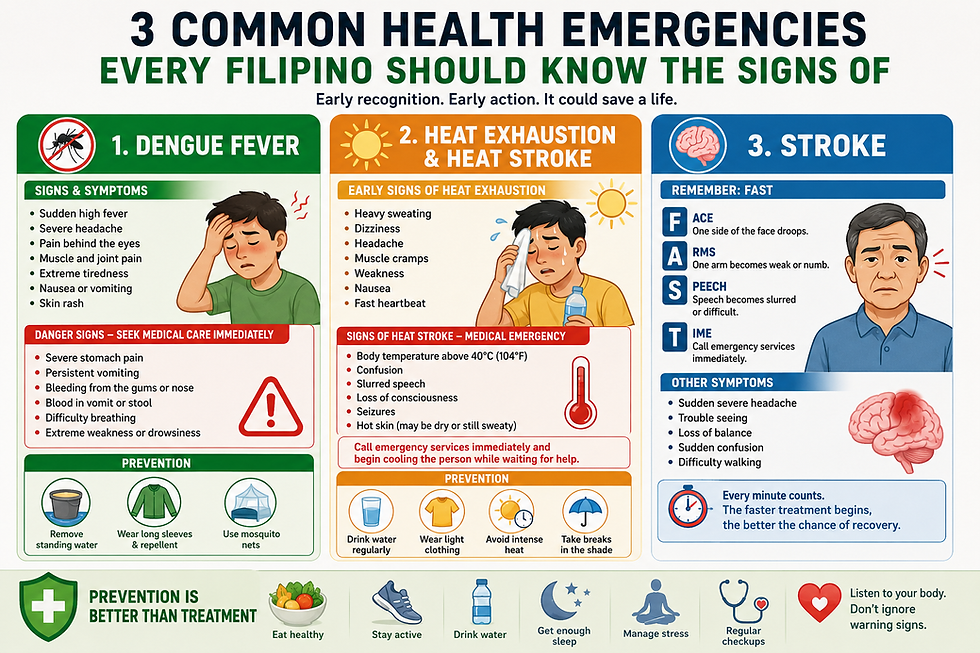
One of the best ways to protect your health isn't just eating well or exercising—it's knowing when something is wrong.
Many illnesses become much easier to treat when they're caught early. Learn these warning signs, pay attention to your body, and never ignore symptoms that don't feel normal.
1. Dengue Fever
Dengue is common throughout the Philippines, especially during the rainy season. Mosquito bites can spread the virus, and early recognition can save lives.
Signs and Symptoms
Sudden high fever
Severe headache
Pain behind the eyes
Muscle and joint pain
Extreme tiredness
Nausea or vomiting
Skin rash
Danger Signs – Seek Medical Care Immediately
Severe stomach pain
Persistent vomiting
Bleeding from the gums or nose
Blood in vomit or stool
Difficulty breathing
Extreme weakness or drowsiness
Prevention
Remove standing water around your home.
Wear long sleeves and mosquito repellent.
Sleep under mosquito nets if needed.
2. Heat Exhaustion and Heat Stroke
The Philippine climate is beautiful, but extreme heat can become dangerous very quickly.
Early Signs of Heat Exhaustion
Heavy sweating
Dizziness
Headache
Muscle cramps
Weakness
Nausea
Fast heartbeat
Move to a cool place, drink water, and rest immediately.
Signs of Heat Stroke (Medical Emergency)
Body temperature above 40°C (104°F)
Confusion
Slurred speech
Loss of consciousness
Seizures
Hot skin (may be dry or still sweaty)
Call emergency services immediately and begin cooling the person while waiting for help.
Prevention
Drink water regularly.
Wear light clothing.
Avoid intense activity during the hottest hours.
Take breaks in the shade.
3. Stroke
A stroke happens when blood flow to the brain is interrupted. Every minute counts.
Remember: FAST
F – Face One side of the face droops.
A – Arms One arm becomes weak or numb.
S – Speech Speech becomes slurred or difficult.
T – Time Call emergency services immediately.
Other Symptoms
Sudden severe headache
Trouble seeing
Loss of balance
Sudden confusion
Difficulty walking
The faster treatment begins, the better the chance of recovery.
Prevention Is Better Than Treatment
Many health emergencies can be reduced by simple daily habits:
Eat mostly whole, minimally processed foods.
Stay physically active every day.
Drink enough water.
Get quality sleep.
Spend time outdoors safely.
Manage stress through prayer, family, nature, and community.
Get regular medical checkups.
Listen to your body—don't ignore warning signs.
Your body usually gives you clues before a serious illness develops. Learning these signs could help save your own life—or someone else's.
Make longevity a lifestyle.



Comments